
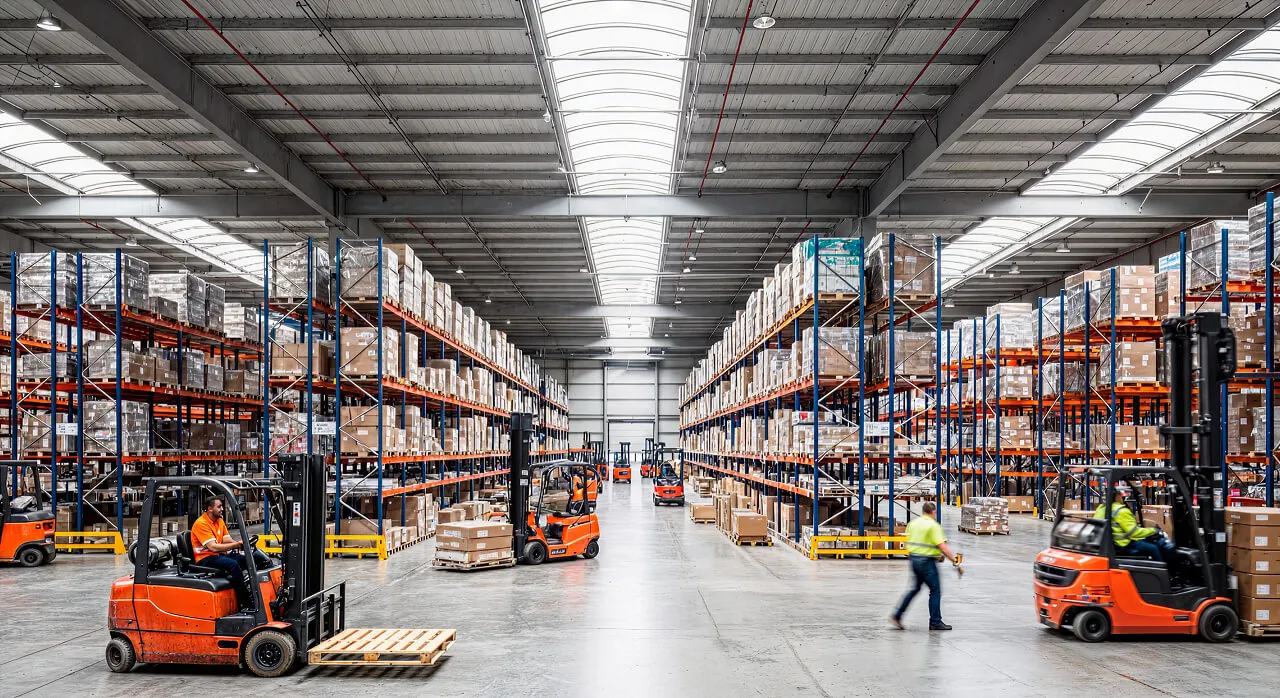
Manufacturers face growing pressure to improve inventory accuracy, increase operational visibility, reduce production delays, and meet rising customer expectations for traceability. Yet many companies still rely on disconnected legacy ERP systems, spreadsheets, or standalone warehouse management software that create data silos across operations.
As supply chains become more complex and manufacturers scale production, integrated warehouse management is becoming a critical requirement—not an optional enhancement.
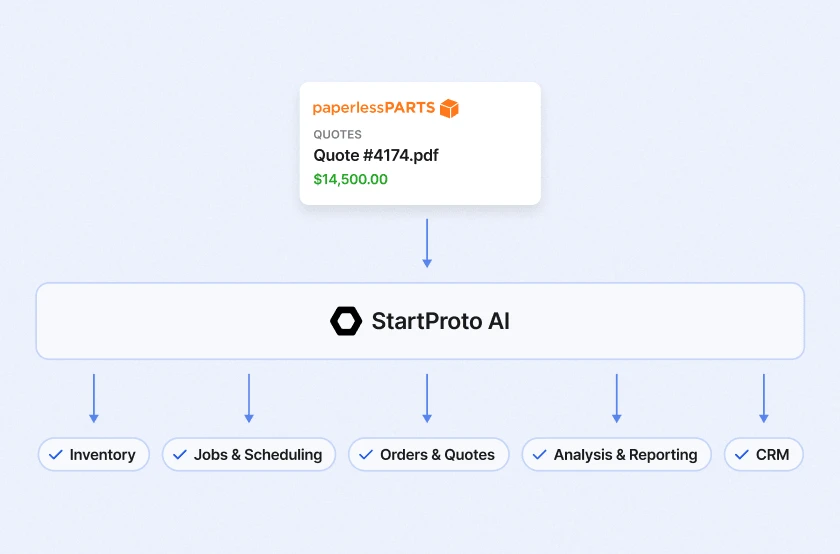
Modern cloud manufacturing software is changing the way manufacturers manage inventory, warehousing, purchasing, production, and traceability by bringing these workflows into a single connected platform.
The Problem with Disconnected Manufacturing Systems
Many manufacturers operate with separate systems for ERP, inventory management, warehousing, and production planning. While this may have worked years ago, disconnected infrastructure creates operational friction that slows growth and increases costs.
Common issues include:
- Duplicate data entry between ERP and warehouse systems
- Delayed inventory updates
- Inaccurate stock counts
- Limited traceability across inventory movement
- Production delays caused by missing or misplaced materials
- Poor visibility into raw materials, work-in-progress inventory, and finished goods
When warehouse data and ERP data are not synchronized in real time, manufacturers lose the operational visibility needed to make accurate decisions.
Why Integrated Warehouse Management Matters
Integrated warehouse management connects warehouse operations directly to manufacturing workflows. Instead of relying on separate systems and manual reconciliation, manufacturers gain a unified operational environment.
This approach allows teams to:
- Track inventory locations in real time
- Monitor material movement throughout production
- Reduce picking and fulfillment errors
- Improve inventory accuracy
- Simplify cycle counting
- Increase warehouse efficiency
- Support traceability and compliance initiatives
Teams can maintain consistent inventory visibility while improving planning and production coordination.
The Rise of Cloud Manufacturing Software
Cloud manufacturing software gives manufacturers the flexibility and scalability that legacy on-premise ERP systems often lack.
Unlike traditional manufacturing ERP systems that require costly infrastructure and complex upgrades, cloud-based platforms allow manufacturers to:
- Access operational data from anywhere
- Scale quickly as operations grow
- Improve collaboration between departments
- Reduce IT maintenance costs
- Deploy updates and new functionality faster
- Centralize production, inventory, and warehouse management
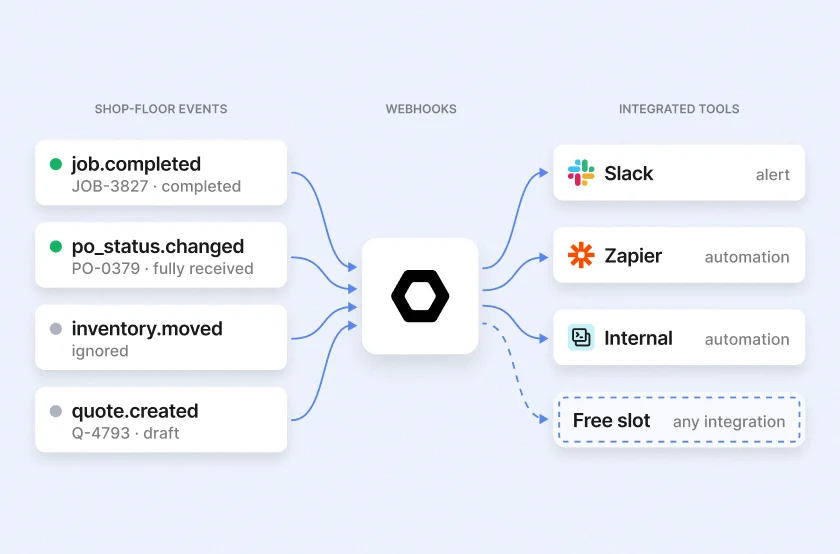
Cloud-based ERP software for manufacturers also supports system integrations to further power real-time operational visibility. Inventory updates, warehouse transactions, production status, and purchasing activity can all be shared across systems and reflected immediately across the organization.
This real-time synchronization helps reduce errors while improving responsiveness across manufacturing operations.
Why Traceability Is Becoming Essential
Traceability has become increasingly important for manufacturers across aerospace, medical device, industrial equipment, automotive, and consumer product industries.
Customers and regulators now expect manufacturers to maintain clear records of:
- Material origins
- Production history
- Inventory movement
- Quality inspections
- Supplier relationships
- Product serialization
- Lot genealogy
Without built-in warehouse traceability, manufacturers may struggle to respond effectively to quality issues, audits, or recalls.
Modern warehouse management software integrated into cloud manufacturing platforms helps manufacturers establish end-to-end visibility across inventory and production workflows.
How Location-Based Warehousing Improves Operations
One of the most impactful capabilities in modern warehouse management software is location-based warehousing.
Location-based inventory tracking allows manufacturers to assign materials and products to specific warehouse bins, shelves, staging areas, or production zones.
This helps manufacturers:
- Reduce time spent searching for inventory
- Improve picking accuracy
- Support faster production workflows
- Eliminate inventory confusion
- Increase warehouse organization
- Improve inventory accountability
For growing manufacturers, location-based warehousing creates the operational structure necessary to scale effectively.
AI Manufacturing Software Is Driving the Next Evolution
The next generation of AI manufacturing software is bringing even more intelligence into warehouse and inventory management.
AI-powered manufacturing platforms are beginning to support:
- Predictive inventory planning
- Automated replenishment recommendations
- Warehouse optimization insights
- Inventory anomaly detection
- Production forecasting
- Intelligent operational reporting
As manufacturers continue digitizing operations, AI manufacturing software will play an increasingly important role in helping organizations improve efficiency, reduce waste, and make better operational decisions.
Unified Manufacturing Platforms Are the Future
Manufacturers no longer benefit from operating disconnected systems that create delays and operational blind spots.
The future belongs to connected, cloud-based manufacturing platforms that unify:
- ERP software for manufacturers
- Warehouse management software
- Production management
- Purchasing
- Inventory control
- Traceability
- AI-driven operational insights
Integrated warehouse management is now foundational to modern manufacturing operations. Manufacturers that invest in connected cloud manufacturing software gain the visibility, scalability, and operational control needed to compete in increasingly demanding markets.
Conclusion
As manufacturers modernize operations, the need for unified ERP and warehouse management capabilities continues to grow.
Cloud manufacturing software with integrated warehouse management helps manufacturers improve inventory accuracy, streamline operations, strengthen traceability, and prepare for future AI-driven optimization.
For manufacturers looking to reduce operational inefficiencies while building a scalable foundation for growth, integrated warehouse traceability is no longer optional—it is essential.
Ready to modernize your manufacturing operations? Schedule a demo with StartProto to see how integrated warehouse management and cloud manufacturing software can improve inventory visibility, traceability, and operational performance.

Unlock the potential of AI manufacturing
Blogs & Resources
Industry trends, manufacturing business tips, and more

Ready to get started?
We'll make it easy for you — pick the time that works best for you and we'll send an invite right to your calendar.