
AI in Metal Fabrication: 5 Practical Applications That Deliver Measurable ROI
For metal fabricators and contract manufacturers looking to improve throughput, responsiveness, and operational predictability, the opportunity is to start with practical problems where AI can make a measurable difference—and build from there.
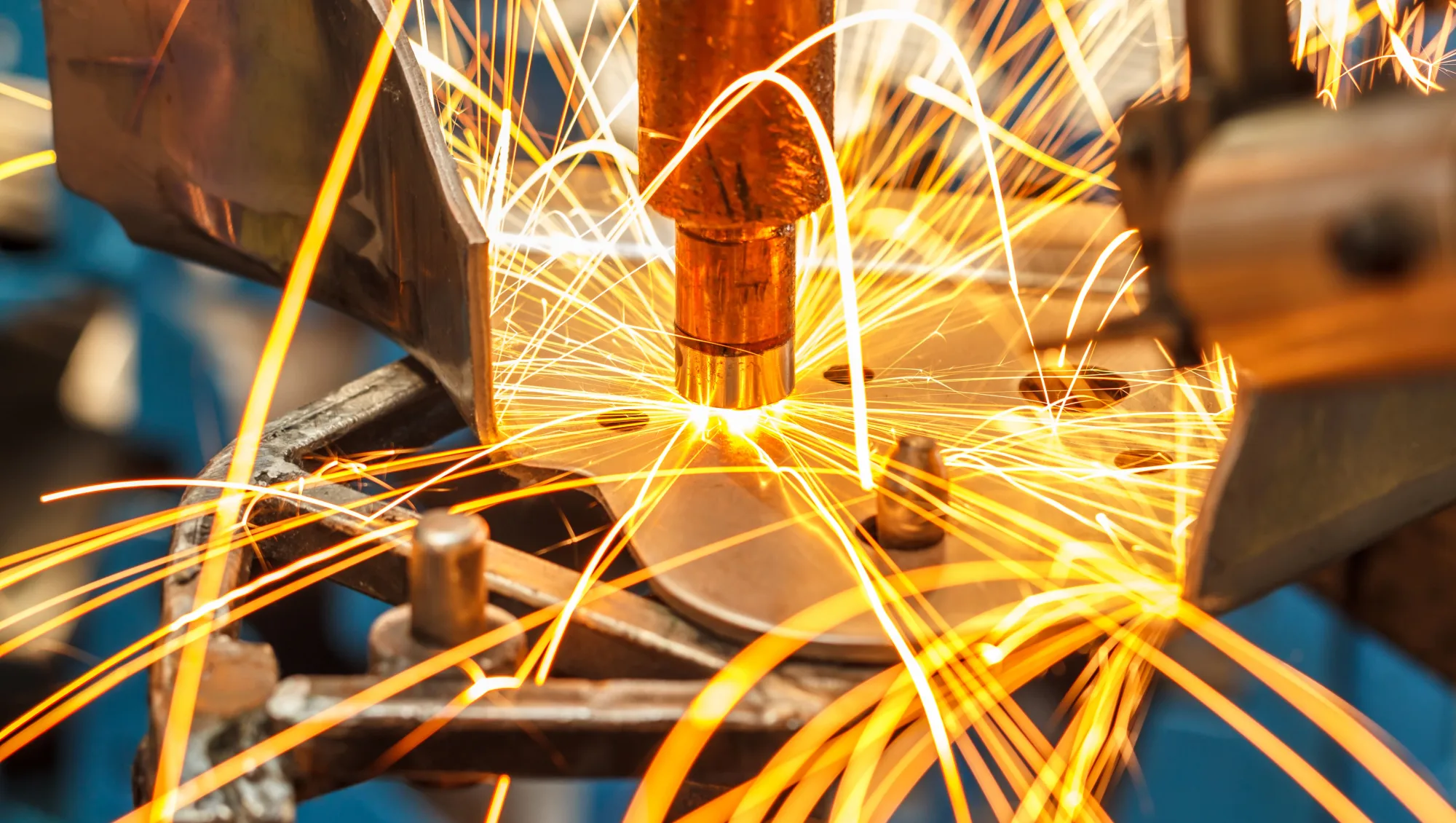
Where AI can solve real operational problems and deliver measurable business value?
Manufacturers are already using AI to analyze data, automate repetitive work, improve planning, and support complex decisions. The opportunity is especially significant in production environments where schedules change constantly, material availability can shift, and customer demands compete for limited capacity.
The most valuable applications aren't necessarily about replacing people. They're about helping experienced manufacturing professionals make better decisions, faster.
Here are five practical ways AI can improve manufacturing operations today for fabricators.
1. AI-Powered Production Planning & Scheduling
Production scheduling is one of the most complex challenges in manufacturing. A schedule has to account for available capacity, material availability, machine setup times, production priorities, customer commitments, operational constraints, and changing requirements. When one variable changes, the impact can extend across multiple orders and processes.
Traditional approaches often require planners to manually evaluate these relationships using spreadsheets, ERP data, reports, and their own experience. AI can help.
AI-powered manufacturing scheduling can analyze large amounts of operational data and help identify:
- Potential scheduling conflicts
- Capacity constraints
- Material-related delays
- Opportunities to improve production sequencing
- The potential impact of rush orders
- Downstream effects of schedule changes
- Alternative production scenarios
The goal isn't necessarily to have AI create a schedule without human involvement. In manufacturing, experienced planners bring context and judgment that may not exist in the underlying data.
A better approach is human-in-the-loop AI: AI analyzes the variables, identifies potential options, and helps planners evaluate the consequences of different decisions.
For example, instead of simply moving an order to an earlier date, a planner could use AI to evaluate what happens if that order is prioritized. Which other production commitments are affected? Are the required materials available? Does the change create another bottleneck?
That turns AI from an automation tool into a decision-support tool.
2. AI for Material Planning and Inventory
Having the right material available at the right time is fundamental to production performance. Too little inventory can create shortages and production delays. Too much inventory ties up working capital and can create unnecessary carrying costs.
The challenge becomes even greater when customer demand changes or production priorities shift. AI can help manufacturers analyze the relationships between demand, inventory, purchasing requirements, and production plans.
Practical applications include:
- Identifying potential material shortages
- Connecting material requirements to upcoming production
- Detecting changes in demand that could affect purchasing
- Identifying inventory that may no longer align with current requirements
- Evaluating how production schedule changes could affect material requirements
- Surfacing potential risks before they become production delays
Instead of asking only, "Do we have enough material?", manufacturers can begin asking a more useful question: "What could prevent us from fulfilling this production requirement, and what can we do about it?"
That shift from reactive problem-solving to proactive planning is where AI can create significant value.
When material planning, demand, purchasing, and production scheduling are connected, manufacturers gain a clearer picture of how decisions in one area affect the rest of the operation.
3. AI for Managing Changing Customer Demand
Manufacturing plans rarely remain static. A customer may request an expedited order. A delivery date may change. An order may be canceled. A new high-priority requirement may arrive while production capacity is already committed.
Each change can create a ripple effect. The question isn't simply: "Can we move this order up?"
The better questions are:
- What capacity is available?
- Are the required materials available?
- Which other orders could be affected?
- What production activities would need to move?
- Would the change create another bottleneck?
- Which customer commitments could be put at risk?
- What happens if we use a different production sequence?
AI can help analyze these relationships much faster than a person manually reviewing multiple systems and spreadsheets. This is particularly valuable for manufacturers managing complex or high-mix production environments, where changing one priority can have consequences across multiple orders.
AI can help planners evaluate different scenarios before committing to a change.That ability to ask "what if?" and quickly understand the operational consequences can help manufacturers become more responsive without making their production plans less predictable.
4. AI as a Manufacturing Decision-Making Assistant
Manufacturers have more operational data than ever. ERP systems, MRP platforms, production systems, inventory systems, scheduling tools, quality systems, and other applications all generate valuable information.
The challenge isn't always a lack of data. It's knowing what matters right now. Manufacturing leaders and planners may spend significant time searching for information, comparing data across systems, identifying exceptions, and trying to understand what those findings mean for the operation.
AI can act as a decision-making assistant by helping teams:
- Find relevant operational information
- Identify exceptions and potential risks
- Analyze relationships between data points
- Explain potential problems
- Evaluate possible actions
- Explore production scenarios
- Reduce repetitive analysis
This is an important distinction between AI-powered manufacturing and traditional automation. Traditional automation typically follows predefined rules. AI can help users analyze changing circumstances and work through more complex, multi-step decisions.
That doesn't mean removing the human from the process. In fact, manufacturing may be one of the environments where human-in-the-loop AI is most valuable. An experienced manufacturing professional understands customer relationships, operational realities, priorities, and exceptions that may not be fully represented in a database.
AI can process the information. The human makes the decision. That combination can be significantly more powerful than either working alone.
StartProto's Plan Mode is designed around this concept, giving users a way to work through complex, multi-step AI tasks while keeping people involved in the decision-making process.
5. AI-Powered Automation of Repetitive Manufacturing Workflows
Not every manufacturing AI application needs to involve a major strategic decision. There is also significant value in reducing the repetitive administrative and analytical work that consumes employees' time.
Manufacturing professionals may spend hours:
- Searching for information
- Preparing reports
- Comparing production data
- Reviewing records
- Updating systems
- Identifying exceptions
- Preparing planning scenarios
- Moving information between systems
- Gathering information before making a decision
These activities may not directly produce a product, but they can consume valuable time from the people responsible for keeping production moving.
AI agents can increasingly automate portions of these workflows. The most effective approach isn't necessarily to remove the human from the workflow. Instead, AI can handle the repetitive work, present the result, and allow a person to review or approve the outcome.
As manufacturing organizations explore agentic AI, this distinction will become increasingly important. The goal should be to identify workflows where AI can eliminate unnecessary effort while improving speed, consistency, and decision quality.
How Do You Know Where AI Will Deliver the Most ROI?
With so many potential applications, where should a manufacturer start?
Start with the business problem.
1. Is the process repetitive?
If employees repeatedly perform the same analysis or administrative task, AI may be able to reduce the manual effort involved.
2. Does the process involve large amounts of data?
AI becomes particularly useful when people need to evaluate large volumes of information to identify patterns, exceptions, or potential problems.
3. Does the decision involve multiple variables?
Production scheduling and material planning are good examples. A decision that involves capacity, materials, priorities, lead times, and customer commitments can be difficult to evaluate manually.
4. Can the business impact be measured?
Prioritize use cases connected to measurable outcomes such as:
- Throughput
- Production lead time
- On-time delivery
- Inventory levels
- Capacity utilization
- Labor productivity
- Schedule adherence
If the outcome can't be measured, it can be difficult to determine whether an AI investment is actually delivering value.
Conclusion
The Future of Manufacturing AI Is Human + Machine
The most valuable manufacturing AI won't necessarily be the technology that replaces the most people. It will be the technology that helps experienced manufacturing professionals make better decisions with less effort.
AI can analyze large amounts of operational information, identify patterns, evaluate scenarios, surface risks, and automate repetitive work.But manufacturing decisions still require context.
Customer commitments matter. Production experience matters. Business priorities matter. And sometimes the best decision isn't the one that an algorithm would make based solely on the available data.
For metal fabricators and contract manufacturers looking to improve throughput, responsiveness, and operational predictability, the opportunity is to start with practical problems where AI can make a measurable difference—and build from there.
Ready to see what practical AI can look like in manufacturing operations?
Explore StartProto's AI-powered manufacturing capabilities →

Unlock the potential of AI manufacturing
Blogs & Resources
Industry trends, manufacturing business tips, and more
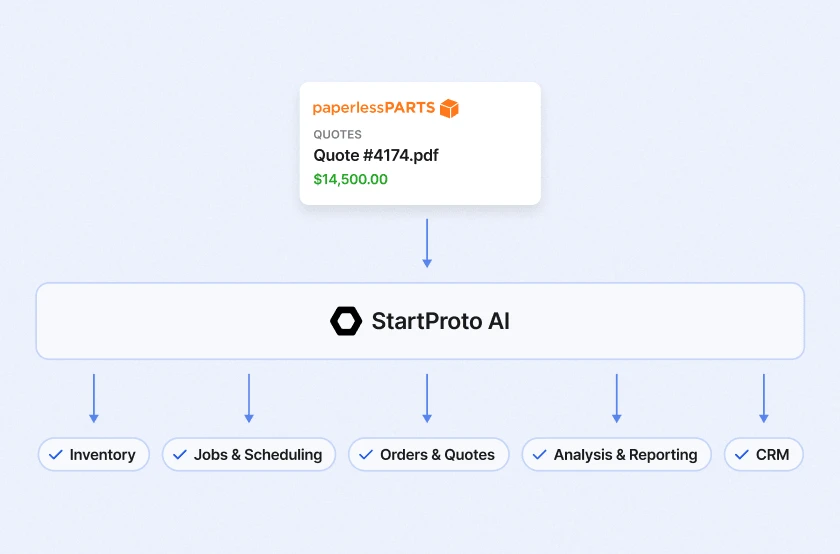
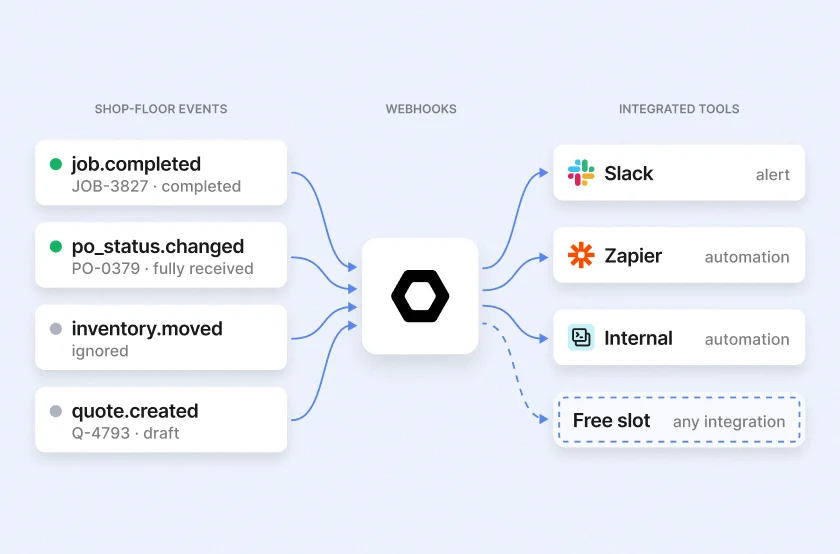
Ready to get started?
We'll make it easy for you — pick the time that works best for you and we'll send an invite right to your calendar.