
FedRAMP Compliance at StartProto: A Q&A on What It Means for Manufacturers
An inside look at StartProto’s pursuit of FedRAMP Moderate certification ahead of the November 10 deadline. This Q&A breaks down why a verified third-party audit against NIST 800-53 matters for defense and ITAR-regulated manufacturers, how the platform handles strict FIPS 140 encryption, and what this security hardening means for both commercial and government contractors.
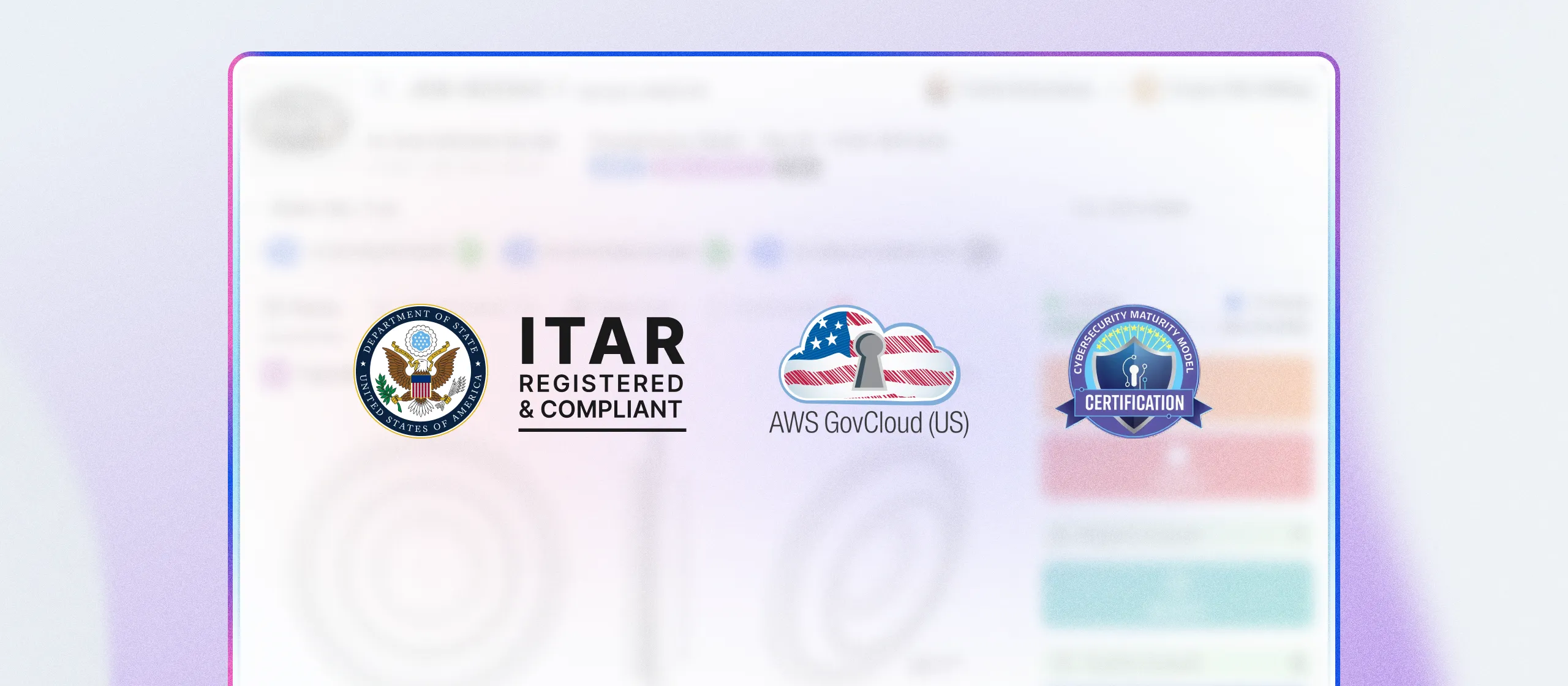
Why StartProto Is Pursuing FedRAMP
Government contracts are among the most valuable work a manufacturer can win, but they come with strict rules for handling data. StartProto is currently pursuing FedRAMP Moderate certification, a process that touches encryption standards, device configuration, and ITAR compliance across the platform.
We sat down with TJ Elam, StartProto's Head of Engineering, who is leading the technical side of this effort, to break down why we're pursuing certification, what the audit process looks like, and what it means for the manufacturers who trust us with sensitive data.
What Is FedRAMP, and Why Is StartProto Pursuing It?
FedRAMP is the federal government's standard for securing cloud systems before they can be trusted with government data. Certification lets StartProto support customers with government or defense-related contracts, not just commercial manufacturers. Without it, we aren't eligible to serve that part of the market.
Who Is Helping StartProto Get There?
We're working with two firms, one that handles preparation while the other serves as our independent third-party auditor, and we've kept those roles separate on purpose so the team helping us prepare isn't also the one grading us. There's a hard deadline of November 10 tied to CMMC requirements, so our current work focuses on checking off requirements methodically. A zero rating on even a single control can sink an entire audit, so there's not much room for partial credit here.
What Framework Are You Being Measured Against?
FedRAMP is built on NIST 800-53, Revision 5: more than 300 control items across families like access control and change management. We're targeting FedRAMP Moderate, which will be renamed Class B next year. In practice, that means almost every part of how we build, deploy, and monitor the platform gets mapped to a specific control, not just the pieces that touch government data directly. Some controls are parametric, requiring specific actions within a set timeframe. Others are absolute requirements that have to hold true at all times.
What Do the Encryption Requirements Involve?
We need FIPS 140 certified encryption, strong enough that even our cloud provider, AWS, can't access the underlying data. That has to be implemented consistently across employee devices and application architecture, without disrupting the workflows our customers already rely on.
Does This Affect Every StartProto Customer?
No. Commercial customers on app.startproto.com fall outside the scope of FedRAMP entirely. The requirements apply to government and ITAR-regulated customers, who also fall under the U.S. Munitions List, restricting access to certain controlled items, including high-performance chips, to U.S. persons. For a platform like ours, that restriction reaches beyond the data itself. Account access becomes a control point in its own right, not just the information sitting behind it.
What Exactly Are You Protecting for Those Customers?
The core categories are Confidential Unclassified Information and Federal Contract Information. Any system that touches that data, or plays a role in keeping it confidential, accurate, and available, has to meet FedRAMP Moderate standards, not just the systems holding the data directly.
Why Pursue a Third-Party Audit When Self-Attestation Is Allowed?
Self-attestation lowers the bar on paper, not the actual risk. A third-party audit confirms our internal FedRAMP boundary genuinely manages these controls the way it's supposed to. That matters because if something slipped through under self-attestation, the liability wouldn't stop with us. Our customers are relying on our compliance to satisfy their own contract obligations, so an audit protects both sides.
Is This a StartProto-Specific Issue, or Industry-Wide?
It's an industry-wide risk. We won't claim to be experts on every ERP on the market, but the pattern holds regardless of which platform a contractor picks. Any company doing federal contract work takes on real exposure if the systems running its operations aren't compliant, and that risk sits with the contractor, not the software vendor, the moment they sign a federal contract. That's part of why we're getting ahead of it now rather than reacting once a customer asks.
What Has Surprised You Most in This Process?
The scope of the CIA triad: confidentiality, integrity, and availability. It's intuitive that sensitive data needs protection. It's less obvious that systems with no sensitive data still fall in scope if they keep other sensitive systems online and available. That expanded the boundary further than we initially expected.
What Happens Once StartProto Is Certified?
We'll be listed on the FedRAMP Marketplace, a trusted directory of approved vendors for government buyers. For customers, that removes the administrative overhead of managing systems with varying compliance levels, since they no longer have to piece together assurances from a patchwork of vendors themselves. It also means they don't have to take our word for it. The listing itself is proof that a third party has already verified the controls behind it.
Does Every Government Contract Require This Level of Compliance?
Not always, it depends on the specific contract, not the industry. But contracts tied to U.S. security priorities almost always require it. Falling short doesn't just put you at a disadvantage, it excludes you from bidding, and that work goes to a competitor who qualifies.
What's Next on the Roadmap?
We're hardening data protections and rolling out advanced monitoring to catch threats early. Next is automated security testing, including penetration testing on the application, and automatic security policies across the team so every device, firewall, lock screen, and encryption setting stays compliant without manual checks.
Conclusion
FedRAMP certification isn't a box StartProto is checking to win a single contract. It's a commitment to the same standard we'd expect from a vendor holding our own sensitive data. Between now and the November 10 deadline, that means continued hardening, monitoring, and testing, alongside the platform commercial manufacturers already rely on daily.
Once certified, StartProto will support both sides of manufacturing at once: commercial customers untouched by this process, and government or ITAR-regulated customers who need a platform built to withstand real scrutiny.
Have questions about where StartProto stands on FedRAMP or what it means for your compliance needs? Book a demo and we'll walk you through it.
Related reading

Unlock the potential of AI manufacturing
Blogs & Resources
Industry trends, manufacturing business tips, and more

Ready to get started?
We'll make it easy for you — pick the time that works best for you and we'll send an invite right to your calendar.