
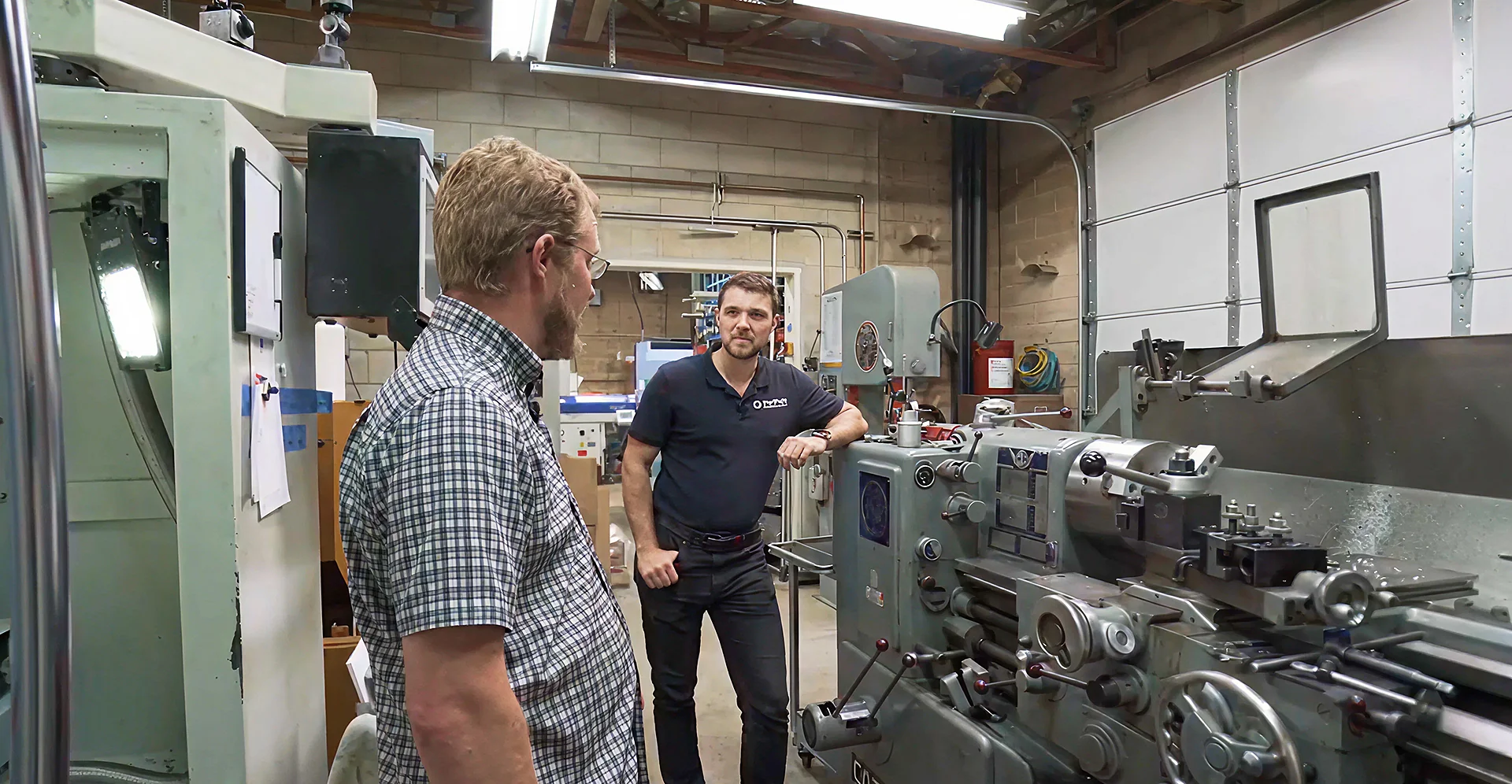
Contract manufacturers live in a world of constant variability. Short runs. Frequent changeovers. Custom routings. Tight customer deadlines. Unlike high-volume manufacturers, there is no “set it and forget it” production plan. Every day brings new constraints—and traditional tools struggle to keep up.
This is where AI manufacturing scheduling is becoming a competitive necessity rather than a future concept. For high-mix, small-batch environments, modern scheduling must continuously adapt to real-world conditions on the shop floor while staying aligned with customer commitments and financial targets.
The Scheduling Challenge in Contract Manufacturing
High-mix manufacturing environments introduce complexity that manual planning methods and legacy systems were never designed to handle.
Schedulers must account for:
- Constant engineering changes and custom BOMs
- Frequent machine setups and tear-downs
- Shared resources across unrelated jobs
- Outside processing dependencies
- Material availability that shifts daily
Spreadsheets and static APS tools quickly fall out of sync with reality. Even many traditional manufacturing scheduling software platforms assume stable demand, predictable routings, and minimal variability—conditions that rarely exist for contract manufacturers.
The result is firefighting: missed due dates, excess WIP, expedited freight, and stressed production teams.
Why AI Changes the Game for High-Mix Scheduling
Unlike rule-based or static planning tools, AI manufacturing scheduling systems continuously analyze live operational data to understand what is happening now—not just what was planned yesterday.
AI-driven scheduling engines can:
- Re-sequence jobs automatically as conditions change
- Forecast and optimize for competing objectives (on-time delivery, utilization, margin)
- Learn from historical performance to improve future plans
- Identify bottlenecks before they impact delivery dates
For contract manufacturers, this means schedules that reflect the true state of the shop floor—machine availability, labor constraints, material readiness, and outside processing lead times—without requiring constant manual intervention.
From Scheduling to Execution: The Role of Operations Management
Scheduling does not exist in isolation. In high-mix environments, execution failures often occur because planning tools are disconnected from operations.
Modern manufacturing operations management software closes this gap by linking scheduling directly to:
- Job status and work-in-process tracking
- Real-time labor and machine data
- Quality events and rework
- Purchasing and outside processing
When scheduling and execution are part of a single operational system, planners gain confidence that schedules are achievable—and operators gain clarity on priorities. This alignment is especially critical for contract manufacturers juggling dozens or hundreds of concurrent jobs.
Why Cloud Matters for Contract Manufacturers
Legacy, on-premise systems limit visibility and slow down decision-making—particularly for growing manufacturers with multiple plants, remote teams, or customers demanding real-time updates.
Cloud manufacturing software enables:
- Real-time access to schedules and job status from anywhere
- Faster deployment and lower IT overhead
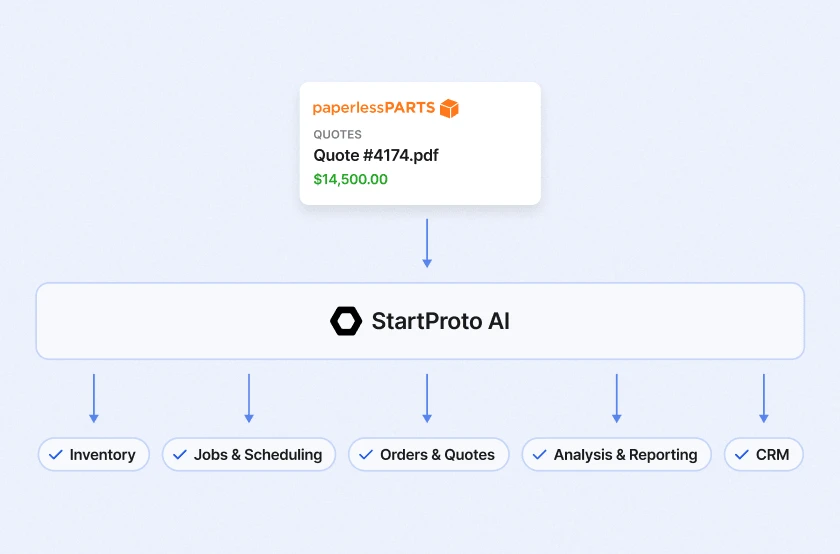
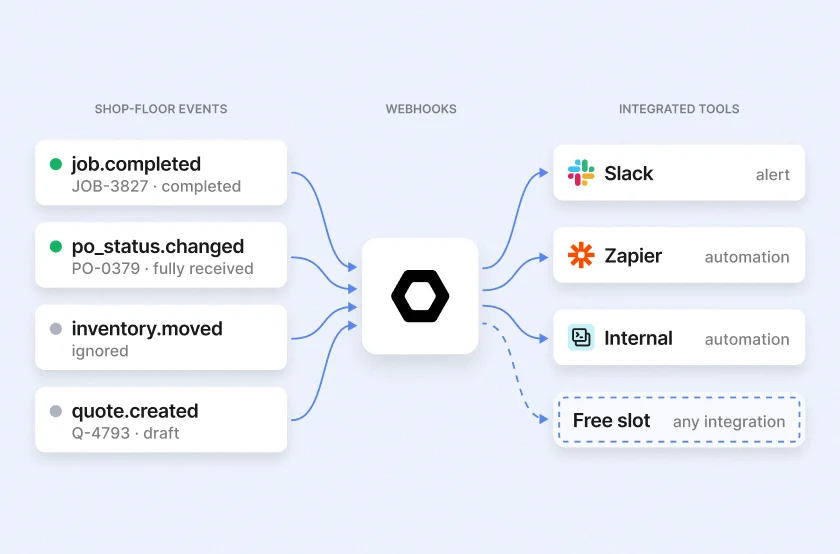
- Seamless integration with ERP, MES, and quality systems
- Continuous updates as AI models improve
For contract manufacturers, cloud platforms provide the flexibility to scale operations without rebuilding processes or infrastructure each time the business grows or changes.
What to Look for in Manufacturing Scheduling Software for High-Mix Shops
Not all manufacturing scheduling software is built for contract manufacturing. When evaluating solutions, look for platforms that:
- Handle variability by design: The system should assume frequent changes—not treat them as exceptions.
- Use AI to optimize, not just visualize: Gantt charts alone do not solve scheduling problems. Optimization matters.
- Connect scheduling to execution: Schedules must reflect real-time shop floor conditions.
- Operate natively in the cloud: Speed, accessibility, and scalability are essential.
- Support cross-functional decision-making: Scheduling impacts purchasing, quality, and customer delivery—not just production.
Conclusion
Turning Complexity into a Competitive Advantage
High-mix, small-batch manufacturing will always be complex. But complexity does not have to mean chaos.
By combining AI manufacturing scheduling, integrated manufacturing operations management software, and modern cloud manufacturing software, contract manufacturers can transform scheduling from a daily struggle into a strategic advantage—improving delivery performance, increasing throughput, and reducing operational stress.
The manufacturers that win are not the ones with the simplest products—but the ones with systems built to handle complexity intelligently.
Let us show you how StartProto simplifies planning and production for high mix, small batch precision manufacturers. Schedule your demo today!
Or learn from our customers' successes. See how Santa Lucia Manufacturing went from a garage side project to a large contract manufacturer with StartProto’s effective, modern business management tools.

Unlock the potential of AI manufacturing
Blogs & Resources
Industry trends, manufacturing business tips, and more

Ready to get started?
We'll make it easy for you — pick the time that works best for you and we'll send an invite right to your calendar.