
From JobBoss to AI-Ready Manufacturing: How Complete Data Migration Unlocks Immediate AI Insights
Many manufacturers assume implementing artificial intelligence requires years of collecting new production data inside a modern manufacturing platform. Most machine shops and contract manufacturers already possess years of valuable operational intelligence. It's simply trapped inside legacy ERP and shop management systems like JobBoss. With the right migration strategy, historical manufacturing data becomes the foundation for smarter decisions from day one.
Legacy Manufacturing Data Isn't the Problem—It's an Untapped Asset
Many manufacturers assume implementing artificial intelligence requires years of collecting new production data inside a modern manufacturing platform.
The reality is the opposite.
Most machine shops and contract manufacturers already possess years of valuable operational intelligence. It's simply trapped inside legacy ERP and shop management systems like JobBoss.
Historical orders, routing information, work sessions, purchasing records, production times, and shipment history represent thousands of hours of manufacturing knowledge. Yet much of this information remains inaccessible for real-time analysis because it lives inside rigid reports, disconnected spreadsheets, or databases that were never designed for AI.
The challenge isn't a lack of data. The challenge is AI data readiness.
When manufacturing data is properly migrated, structured, and connected, AI can begin delivering meaningful operational insights immediately.
Why JobBoss Data Migration Matters
Manufacturers considering replacing JobBoss often focus on preserving active jobs and customer records.
That's only part of the picture.
A complete JobBoss data migration should also preserve historical operational relationships, including:
- Customer and part history
- Work orders
- Routing steps
- Shop floor labor records
- Purchasing transactions
- Material consumption
- Shipment history
- Production timestamps
- User activity
- Historical production durations
This historical information becomes the foundation for AI-powered manufacturing intelligence.
Without it, organizations start over with empty dashboards and months of waiting before analytics become meaningful.
The Challenge: Valuable Manufacturing History Locked Inside JobBoss
One precision manufacturer had accumulated years of production history inside JobBoss. The system successfully managed day-to-day operations, but extracting meaningful business insights had become increasingly difficult.
Questions such as:
- What is our true on-time delivery performance?
- Which customers generate the highest margins?
- Which parts consume the most machining time?
- Where are our biggest scheduling bottlenecks?
- Which routing steps consistently create delays?
Required exporting spreadsheets, building custom reports, and manually analyzing data.
Operational history existed—but it wasn't accessible in a way that supported continuous improvement. Like many manufacturers, they had plenty of data but very little visibility.
The Solution: Complete JobBoss Data Migration into StartProto
Rather than importing only active jobs, the manufacturer performed a complete historical migration into StartProto using AI-assisted migration tools.
The migration preserved:
- Orders and customers
- Parts and revisions
- Routing steps
- Work sessions
- Shipment records
- Purchasing history
- Material records
- Historical timestamps
- Relationships between every manufacturing entity
Instead of flattening data into disconnected tables, every relationship between jobs, parts, operations, materials, and shipments remained intact.
The company was able to begin operating in StartProto immediately without maintaining parallel software systems.
Most importantly, years of manufacturing history became available from day one.
AI Data Readiness Starts with Historical Context
Artificial intelligence is only as valuable as the quality of the data behind it.
Modern manufacturing AI doesn't simply automate repetitive work. It recognizes patterns. It identifies trends. It uncovers opportunities hidden inside years of production history.
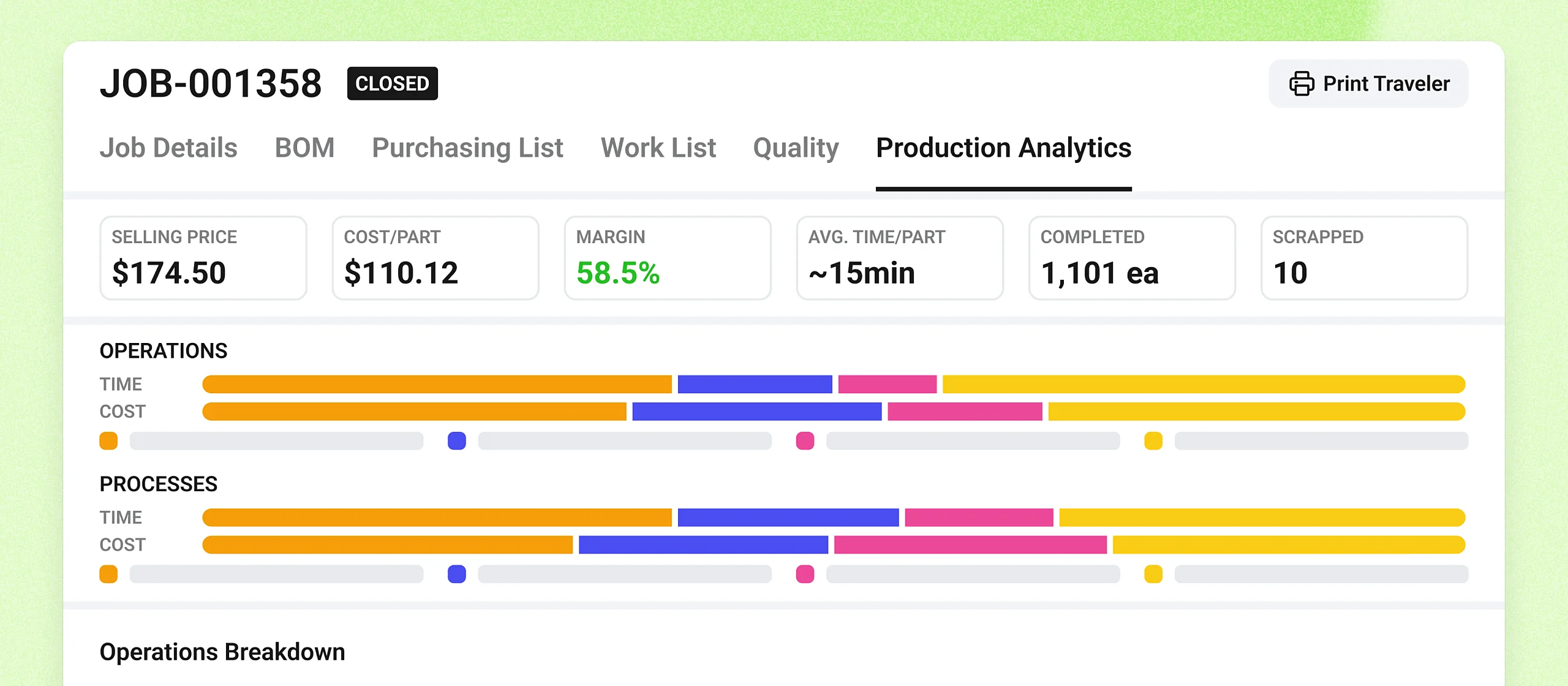
Because the migration preserved historical operational data, StartProto's AI agents immediately began answering questions such as:
- What has our on-time delivery performance been over the last six months?
- Which customers are our most profitable?
- Which parts consistently require the most production hours?
- Which routing steps create the largest bottlenecks?
- How can scheduling be optimized based on historical throughput?
These insights were available immediately after implementation—not months later.
Why AI in Manufacturing Depends on Data Readiness
Many AI initiatives struggle because organizations underestimate the importance of clean, connected operational data. AI cannot generate meaningful recommendations if historical manufacturing knowledge is missing.
By migrating and preserving historical ERP data, manufacturers can immediately begin using AI to:
- Improve Production Scheduling: Historical routing and labor data helps identify scheduling constraints and optimize future production plans.
- Increase Quoting Accuracy: AI analyzes previous jobs to estimate labor hours, setup time, machine utilization, and delivery performance.
- Identify Production Bottlenecks: Historical work sessions reveal recurring delays that traditional reporting often misses.
- Improve Customer Performance: Manufacturers gain visibility into delivery trends, order frequency, profitability, and customer-specific production patterns.
- Support Continuous Improvement: Every completed job strengthens future recommendations, allowing AI models to become increasingly accurate over time.
Beyond Migration: Turning Data into Manufacturing Intelligence
Traditional ERP migrations focus on moving records. AI-ready migrations focus on preserving relationships.That distinction matters.
When production history remains connected, manufacturers don't simply retain data—they retain operational knowledge.
Instead of asking employees to recreate reports or manually analyze spreadsheets, AI agents can instantly surface relevant information through natural language. Manufacturers spend less time searching for answers and more time acting on them.
Results
Following a complete JobBoss migration into StartProto, this manufacturer achieved:
- Complete migration of historical JobBoss operational data
- Immediate access to AI-powered manufacturing analytics
- No need to rebuild reporting datasets
- Faster visibility into production performance
- AI-ready manufacturing data from day one
- Seamless transition to a modern cloud manufacturing platform
Rather than starting over with empty dashboards, the organization began leveraging years of operational history immediately.
Preparing Manufacturing Data for the AI Era
For manufacturers evaluating AI initiatives, success doesn't begin with purchasing new software. It begins with preparing existing manufacturing data.
Years of JobBoss history contain valuable operational intelligence that can improve scheduling, quoting, customer performance, and production efficiency—if that data is migrated correctly.
AI in manufacturing is not about replacing experience. It's about giving manufacturers instant access to everything their business has already learned. With the right migration strategy, historical manufacturing data becomes the foundation for smarter decisions from day one.
Conclusion
Ready to Modernize Beyond JobBoss?
If you're planning a JobBoss migration, don't settle for moving only active records.
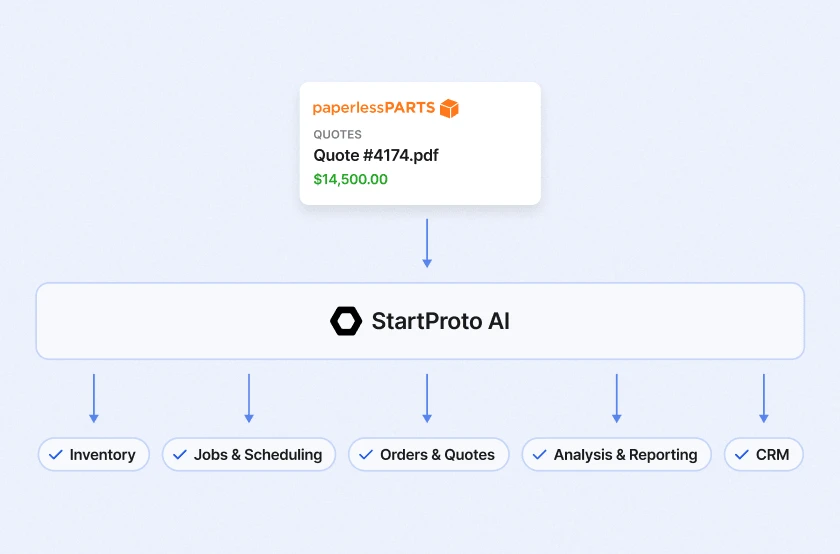
StartProto's AI-assisted migration process preserves the historical manufacturing relationships that make AI valuable, helping manufacturers become AI-ready from the moment they go live.
Request a demo to see how StartProto transforms legacy JobBoss data into actionable manufacturing intelligence.

Unlock the potential of AI manufacturing
Blogs & Resources
Industry trends, manufacturing business tips, and more

Ready to get started?
We'll make it easy for you — pick the time that works best for you and we'll send an invite right to your calendar.