
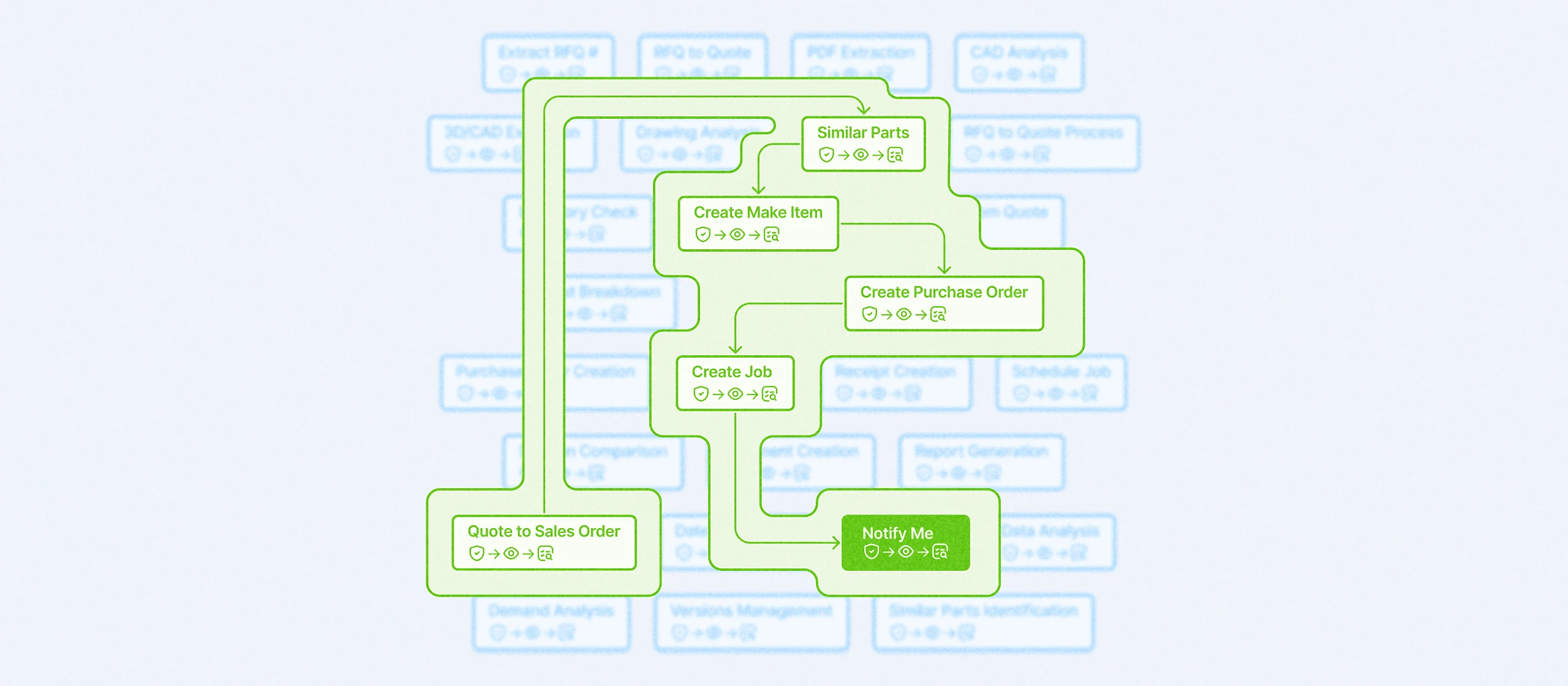
Manufacturers are under pressure to quote faster, improve delivery timelines, reduce waste, and make better operational decisions with less manual effort. Traditional manufacturing software can help manage data, but it often depends on teams to identify issues, make decisions, and take action. AI-powered software changes that dynamic.
AI-powered manufacturing software uses artificial intelligence to automate tasks, analyze data, identify patterns, and recommend actions across the manufacturing process. Instead of simply storing information, the software actively helps manufacturers improve efficiency, reduce costs, and make faster decisions.
For manufacturers managing complex quoting, production scheduling, engineering workflows, and shop floor operations, AI-powered software can become a significant competitive advantage.
How AI-Powered Manufacturing Software Works
AI-powered software uses machine learning, predictive analytics, automation, and natural language processing to help manufacturers work more efficiently.
Examples include:
- Automatically analyzing RFQs and extracting part details
- Recommending pricing based on historical jobs and material costs
- Identifying production bottlenecks before they impact delivery
- Predicting maintenance issues before equipment fails
- Suggesting optimal production schedules based on labor, machine availability, and due dates
- Flagging quality risks or scrap trends before they become larger problems
Unlike traditional manufacturing systems that require manual analysis, AI-powered software can surface insights in real time.
Common Use Cases for AI in Manufacturing
AI in manufacturing can support nearly every stage of the production lifecycle.
Faster and Smarter Quoting
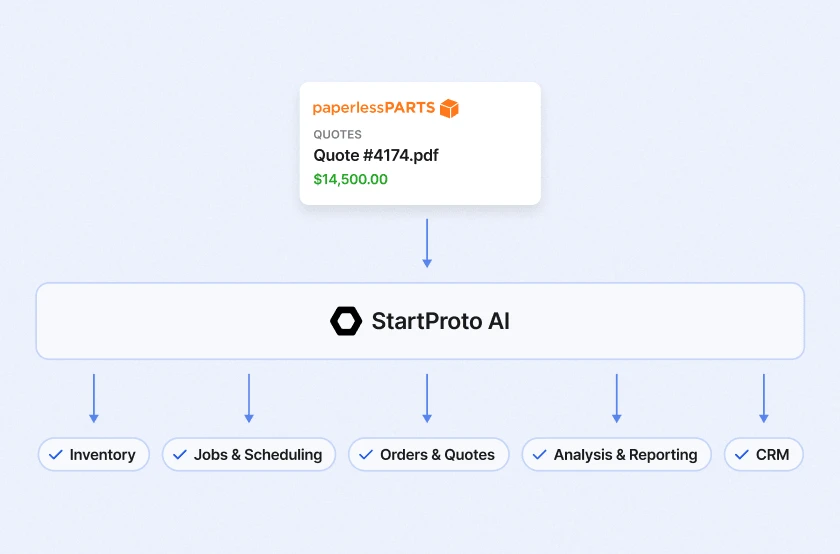
Manufacturers often spend significant time reviewing RFQs, interpreting drawings, and estimating labor and material costs. AI-powered software can help automate this process by extracting information from incoming documents and recommending more accurate quotes.
Improved Production Scheduling
Scheduling is one of the biggest challenges in manufacturing. AI can analyze machine capacity, labor availability, inventory, and due dates to help manufacturers build more realistic production schedules.
Predictive Maintenance
Rather than waiting for equipment to fail, AI can analyze machine data to identify patterns that indicate potential breakdowns. This helps reduce downtime and avoid expensive repairs.
Better Quality Control
AI can help identify trends in defects, scrap, rework, and inspection data. Manufacturers can use these insights to improve process consistency and reduce quality issues.
Stronger Inventory Management
AI-powered software can help forecast inventory needs, reduce stockouts, and minimize excess inventory by identifying usage patterns and demand trends.
Benefits of AI-Powered Manufacturing Software
The biggest advantage of AI-powered manufacturing software is that it helps manufacturers move faster and make better decisions.
Key benefits include:
- Reduced manual effort
- Faster quoting and order processing
- Improved production efficiency
- Lower scrap and rework costs
- Better visibility into operations
- More accurate forecasting and planning
- Reduced downtime and maintenance costs
- Faster response to customer needs
Conclusion
As labor shortages continue and manufacturers face increasing pressure to improve margins, AI-powered software can help teams do more with the resources they already have. AI-powered manufacturing software can help your team quote faster, improve production visibility, and make better operational decisions.
Ready to see how AI can support your manufacturing process? Schedule a demo to see it in action.

Unlock the potential of AI manufacturing
Blogs & Resources
Industry trends, manufacturing business tips, and more

Ready to get started?
We'll make it easy for you — pick the time that works best for you and we'll send an invite right to your calendar.